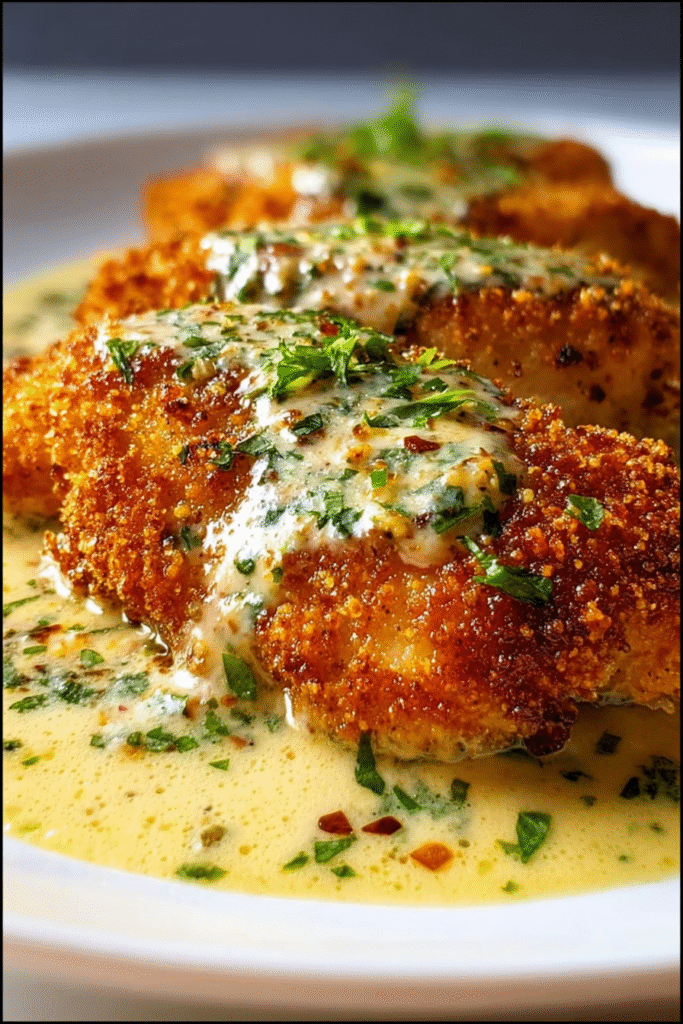
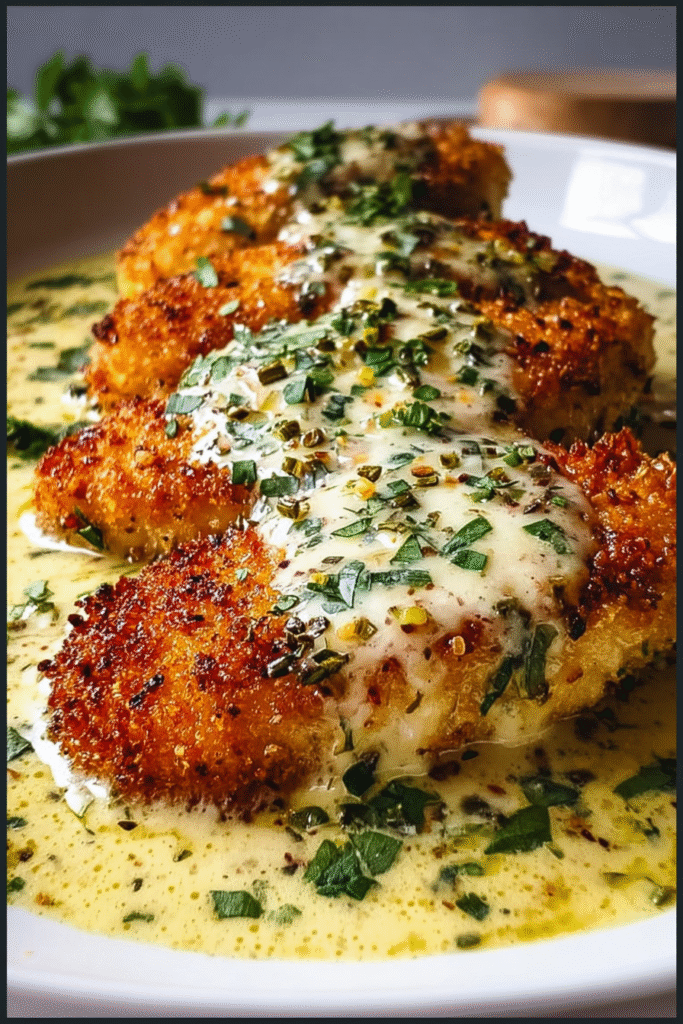
This beloved comfort classic combines crispy, golden-brown parmesan-breaded chicken breasts with a luxurious, silky garlic cream sauce that transforms simple ingredients into an elegant yet approachable dinner. The recipe masters the technique of achieving perfectly crisped chicken exterior while maintaining tender, juicy meat inside, then finishes with a restaurant-quality garlic sauce that brings everything together in moments. With its balance of textural contrast, aromatic garlic depth, and creamy richness, this dish delivers the satisfaction of special-occasion cooking with the efficiency and accessibility that makes it a weeknight possibility, earning its place in family recipe collections through generations of praise and reliable results.
Why You’ll Love This Recipe
- Crispy-Meets-Creamy Perfection – The textural contrast between the crunchy, golden-brown parmesan crust and the silky, tender cream sauce creates an engaging eating experience that feels indulgent yet balanced.
- Restaurant-Quality at Home – This dish rivals upscale restaurant preparations despite using accessible ingredients and straightforward techniques, delivering impressive results without professional training or specialty equipment.
- Quick Yet Special – The 35-minute total time allows preparation on busy weeknights, yet the finished presentation and sophisticated flavor profile feel like you spent hours in the kitchen.
- Aromatic Garlic Excellence – The garlic sauce builds flavor through proper technique—sautéing fresh minced garlic, creating a roux, then slowly building a cream sauce—creating depth that garlic powder alone could never achieve.
- Naturally Customizable – The creamy sauce base easily accepts additions like spinach, mushrooms, sun-dried tomatoes, or fresh herbs, allowing you to incorporate what’s available or preferred.
- Elegant Presentation – Finished plates showcase golden chicken breast topped with luxurious cream sauce, creating the visual appeal of fine dining that impresses both family and guests.
Ingredients You’ll Need
For the Crispy Coating
- 4 boneless chicken breasts – Provides the protein foundation; approximately 6-8 ounces each, pounded to even 3/4-inch thickness for uniform cooking throughout.
- 1/2 cup grated Parmesan cheese – Creates savory, nutty flavor in the coating while contributing to crispiness; use freshly grated Parmesan for best flavor and texture.
- 1/2 cup breadcrumbs – Provides the crispy texture foundation; panko breadcrumbs create superior crunch compared to standard varieties.
- 1 tsp garlic powder – Delivers savory depth to the coating; don’t substitute fresh garlic here, as moisture would prevent proper crispiness.
- 1/2 tsp paprika – Adds subtle warmth, color, and mild peppery flavor; use sweet paprika for gentle flavor or smoked paprika for deeper profile.
- 1/2 tsp salt – Seasons the coating; start with this amount as Parmesan cheese also contributes sodium.
- 1/4 tsp black pepper – Provides subtle heat and complexity; freshly ground offers superior flavor to pre-ground varieties.
- 1 egg, beaten – Acts as the adhesive that binds the coating to the chicken; room temperature egg incorporates more smoothly.
For Cooking the Chicken
- 2 tbsp olive oil – Provides the initial cooking medium for achieving the crust; use regular olive oil (not extra virgin) for higher smoke point.
- 2 tbsp butter – Adds richness to the pan and contributes to golden-brown coloring through butter fat browning.
For the Garlic Cream Sauce
- 4 cloves garlic, minced – Delivers the essential aromatic component; mince finely to distribute evenly and ensure even cooking.
- 1 tbsp all-purpose flour – Creates the roux that thickens the sauce; cook briefly with butter to eliminate raw flour taste.
- 1 cup chicken broth – Provides savory, umami-rich liquid foundation; use low-sodium broth to control salt levels.
- 1 cup heavy cream – Creates the luxurious, silky texture and richness that defines the sauce; whole heavy cream (36-40% fat) works best.
- 1/2 cup grated Parmesan cheese – Adds sharp, nutty, umami-rich flavor and contributes natural thickening through its protein content; freshly grated melts more smoothly.
- Salt and pepper to taste – Final seasoning adjustments; taste and season appropriately after combining all sauce ingredients.
- 1 tsp dried parsley (optional) – Adds fresh herbaceous flavor and visual color; can be replaced with fresh parsley if available.
Step-by-Step Instructions
Prepare the Coating Station
Preheat your oven to 400°F (200°C) if you plan to finish the chicken in the oven for extra crispiness. In a shallow dish or plate, combine the grated Parmesan cheese, breadcrumbs, garlic powder, paprika, salt, and black pepper, stirring with a fork to distribute all seasonings evenly. Pour the beaten egg into another shallow dish. Arrange these two dishes and the raw chicken breasts in convenient proximity for efficient coating.
Pound and Coat the Chicken
Place each chicken breast between two sheets of plastic wrap or in a plastic freezer bag and pound with a meat mallet to even 3/4-inch thickness, which ensures uniform cooking throughout. Working with one chicken breast at a time, dip it into the beaten egg, turning to coat completely, then transfer to the breadcrumb mixture, pressing gently but firmly on both sides to ensure the coating adheres well without falling off during cooking. Place the coated chicken breasts on a clean plate.
Achieve the Golden Crust
Heat the olive oil and butter together in a large skillet over medium-high heat until the butter is melted and the mixture is shimmering. Carefully place the coated chicken breasts in the hot pan—they should sizzle audibly upon contact, indicating adequate heat for proper browning. Cook undisturbed for 5-6 minutes, allowing the bottom side to develop a deep golden-brown crust without moving the chicken, which would prevent proper color development. Flip the chicken carefully and cook the second side for an additional 5-6 minutes until equally golden brown and the internal temperature reaches 165°F when measured with an instant-read thermometer. Transfer the cooked chicken to a clean plate and set aside.
Build the Garlic Roux
In the same skillet (don’t clean it—the browned bits add essential flavor), add the minced garlic over medium heat and sauté for approximately 1 minute, stirring constantly, until fragrant and just beginning to turn golden at the edges. Avoid burning the garlic, which creates harsh, bitter flavors. Sprinkle the all-purpose flour over the garlic and stir continuously for about 1 minute, cooking the flour to eliminate raw flour taste while allowing it to combine with the fat to form a paste-like roux.
Create the Cream Sauce
Gradually pour the chicken broth into the garlic-flour mixture while whisking constantly to prevent lumps from forming. Continue whisking until the sauce begins to simmer and noticeably thickens, which should occur within 1-2 minutes as the flour thickens the liquid. Slowly add the heavy cream while stirring gently, bringing the sauce back to a gentle simmer and continuing to cook for 2-3 minutes, stirring occasionally, until it reaches desired thickness (it should coat the back of a spoon but still pour freely).
Finish the Sauce
Remove the skillet from heat and stir in the grated Parmesan cheese until completely melted and incorporated, creating a smooth, creamy sauce with no visible clumps. Taste the sauce and adjust seasoning with additional salt and pepper as needed—remember that the coated chicken also contributed saltiness, so taste before adding excessive salt.
Reunite and Finish
Return the cooked chicken breasts to the skillet, nestling them into the creamy sauce and spooning some sauce over the top of each piece to coat. Allow the chicken to simmer gently in the sauce for an additional 2 minutes, just long enough to heat the chicken through and allow it to absorb some sauce flavor. If using the optional dried parsley, sprinkle it over the top immediately before serving for freshness and visual appeal.
Optional Oven Finishing
For extra crispiness beyond what pan-frying alone provides, transfer the coated chicken to a baking sheet after step 3, skip the simmering step 6, and place in the preheated 400°F oven for an additional 10 minutes before returning the chicken to the sauce.
Recipe Notes & Tips
- Chicken Thickness Consistency – Pounding to uniform 3/4-inch thickness is crucial; thicker sections remain undercooked while thinner portions become dry and overcooked, affecting the final result.
- Coating Adhesion – Press the breadcrumb mixture firmly onto the egg-coated chicken to ensure it doesn’t fall off during cooking; a gentle touch won’t work, but excessive pressure isn’t necessary.
- Pan Temperature – Adequate heat is essential for achieving proper browning without overcooking the interior; if the pan isn’t hot enough, the chicken steams rather than crisps.
- Roux Technique – The flour must cook briefly with the fat to eliminate raw flour taste but shouldn’t brown excessively; cook only until the mixture is fragrant and paste-like.
- Sauce Whisking – Whisking constantly while adding broth prevents lumps; once the sauce reaches a boil, lumps become nearly impossible to eliminate smoothly.
- Parmesan Cheese Timing – Remove the skillet from heat before adding Parmesan to prevent excessive heat from causing the cheese to become grainy or separate.
Nutritional Information
- Prep Time: 15 minutes (pounding chicken and preparing ingredients)
- Cooking Time: 20 minutes (6 minutes per side for chicken, approximately 8-10 minutes for sauce)
- Total Time: 35 minutes
- Servings: 4 servings (one chicken breast per person with sauce)
- Calories: Approximately 550 per serving (estimated based on standard ingredients)
Perfect Pairings
- Garlic Bread or Crusty Baguette – Serve alongside warm garlic bread or thick baguette slices for soaking up every drop of the luxurious cream sauce, maximizing flavor enjoyment.
- Simple Green Salad – Accompany with crisp mixed greens dressed lightly with balsamic vinaigrette to provide refreshing contrast and cut through the rich, creamy sauce.
- Roasted Vegetables – Pair with roasted asparagus, broccoli, or green beans seasoned simply with lemon and olive oil for added vegetables and textural variety.
- Pasta or Rice – Serve over buttered egg noodles, fettuccine, risotto, or white rice to catch the creamy sauce and make the dish more substantial.
Ideal Occasions
- Weeknight Special Dinners – The 35-minute total time allows preparation on busy evenings when you want something special without extensive planning or cooking.
- Date Night at Home – Create an intimate, restaurant-quality meal that impresses without the expense, wait times, or formality of dining establishments.
- Family Celebrations – Serve for birthdays, anniversaries, or other milestones when you want something memorable that feels like celebration without complexity.
- Dinner Party Entrée – Prepare for guests where the impressive presentation and sophisticated flavors make a statement without requiring individual plating or advanced techniques.
Storage & Serving Tips
- Refrigerator Storage – Store leftovers covered in the refrigerator for 3-4 days; the chicken absorbs sauce during storage, becoming even more flavorful by day two.
- Reheating Instructions – Reheat gently in a skillet over low heat with a splash of cream or broth, stirring occasionally, to prevent the cream sauce from breaking or separating.
- Make-Ahead Consideration – The coating can be prepared in advance and the chicken breasts stored coated (but uncooked) in the refrigerator for up to 24 hours before cooking.
- Freezing Option – While less ideal, cooled, plated chicken can be frozen in containers for up to 2 months; thaw overnight and reheat gently over low heat with additional cream if the sauce appears thick.
Creative Variations to Try
- Spinach and Mushroom Version – Add 2 cups fresh baby spinach and 1 cup sliced mushrooms sautéed with the garlic before making the cream sauce for added nutrition and earthiness.
- Sun-Dried Tomato Variation – Stir 1/2 cup chopped sun-dried tomatoes into the finished sauce for bright, concentrated tomato flavor and visual appeal.
- Italian Herb Profile – Add 1 teaspoon Italian seasoning and fresh basil to the breadcrumb coating and top the finished dish with fresh basil for enhanced herbaceous flavor.
- Lemon Brightness – Add the zest and juice of one lemon to the finished sauce for bright, fresh acidity that balances the richness without overwhelming the garlic flavors.
Troubleshooting Common Issues
- Tough, Dry Chicken – Overcooking or pounding too thin causes dryness; ensure chicken reaches only 165°F internal temperature and pound to consistent 3/4-inch thickness, not thinner.
- Breading Falls Off During Cooking – Insufficient egg coating or light pressing causes adherence problems; dip thoroughly in beaten egg and press the breadcrumb mixture firmly onto the surface.
- Grainy or Broken Cream Sauce – Excessive heat, old cream, or acidic ingredients can break the sauce; maintain gentle heat and ensure all ingredients are fresh and at proper temperature.
- Bland Overall Flavor – Under-seasoning in the coating or sauce is common; taste and adjust salt, pepper, and additional garlic to achieve vibrant, well-balanced flavors.
Why This Recipe Works
Mama’s Crispy Chicken in Creamy Garlic Sauce succeeds through the masterful combination of two cooking techniques—crisping through high-heat sautéing and sauce-building through controlled heat and proper roux technique. The coating of Parmesan cheese and breadcrumbs creates a flavorful crust through Maillard reaction (browning) while the egg acts as a moisture barrier that keeps the interior tender and juicy even as the outside becomes golden and crispy. The aromatic garlic, when sautéed properly in fat, releases volatile compounds that provide depth and complexity no pre-prepared garlic powder could match. The roux technique—cooking flour in fat—creates a thickening agent that won’t become grainy when whisked with cool liquid, ensuring a silky sauce. The combination of chicken broth (savory umami) and heavy cream (luxurious richness) with Parmesan cheese (additional umami and flavor) creates a multilayered sauce that complements the crispy chicken without overwhelming it. The brief simmering of the cooked chicken in the sauce allows it to absorb additional flavors while the sauce cools slightly, preventing excessive re-cooking. At approximately 550 calories per serving, this represents a substantial, indulgent main course where calories derive primarily from protein (chicken, cheese), fats (cream, butter, oil, Parmesan), and modest carbohydrates (breadcrumb coating), creating a filling, satisfying meal that sustains energy for hours.
Final Thoughts
Mama’s Crispy Chicken in Creamy Garlic Sauce represents the pinnacle of comfort food done right—familiar enough to feel nostalgic and achievable, yet sophisticated enough to impress guests and make special occasions feel truly special. This recipe appeals particularly to those seeking elegant cooking that doesn’t require professional training, busy cooks wanting restaurant-quality results quickly, or anyone craving the combination of crispy texture and creamy sauce that defines ultimate comfort. The name invokes multi-generational cooking tradition, suggesting this is the kind of reliable, beloved dish that appears at family tables repeatedly because it never fails to satisfy. The 35-minute total time removes the excuse of “too much effort,” while the versatility allows incorporation of preferred vegetables or flavor adjustments without compromising the essential appeal. While the 550-calorie estimate per serving represents an indulgent main course, the portions are naturally moderate, and serving with vegetables or salad creates balanced meals that fit within reasonable eating patterns. For those seeking lighter versions, consider using skinless chicken pounded thinner, reducing cream to half-and-half, or using low-fat dairy; though these modifications will alter the signature richness that makes this dish special and memorable. Ultimately, this recipe deserves a permanent, honored place in everyday cooking collections as proof that the most satisfied dinner guests often aren’t those served the most complicated dishes—they’re the ones served food made with care, technique, and understanding of how simple quality ingredients, when properly prepared, create magic.